The AI Summit NYC 2025 happened this week, and I attended. 5,000 people. 100+ companies exhibiting. One undeniable message: agentic AI is moving from hype to production, and multi-agent systems are the future.
Here’s what I observed and what the data confirms.
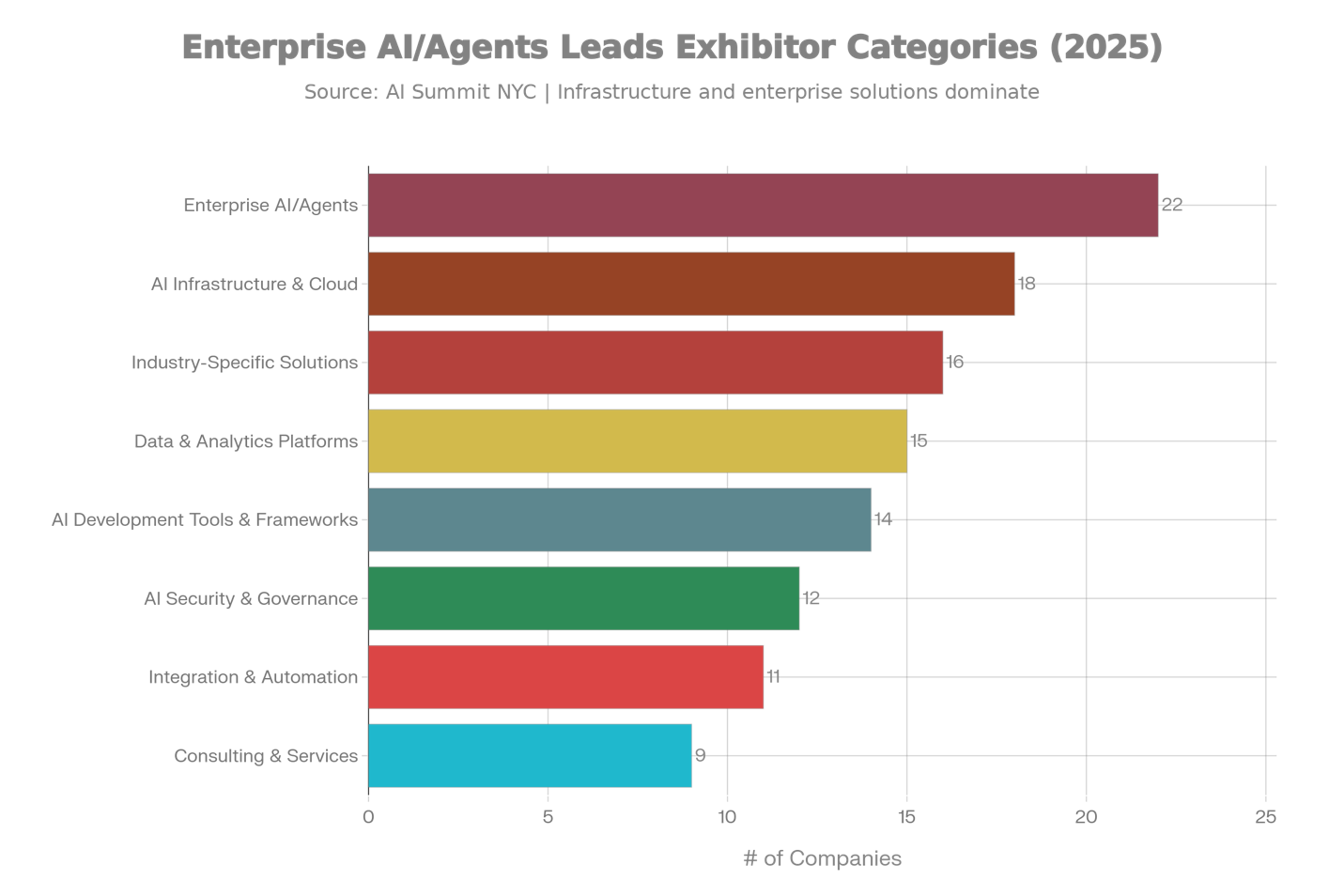
The most striking finding: Enterprise AI/Agents dominated with 22 exhibitors (19% of all companies). This wasn’t a buzz word category. These were serious companies like Camunda, Boomi, Make, and others, all building platforms to deploy autonomous agents in enterprise workflows.
AI Infrastructure (18 companies) and Industry-Specific Solutions (16 companies) came next. But the concentration in agents tells you everything: the market is decisively moving in this direction. Agents are real. They’re being deployed now.
What this means: Enterprises aren’t asking “should we build agents?” anymore. They’re asking, “which agent platform should we use?” That’s a different conversation entirely.
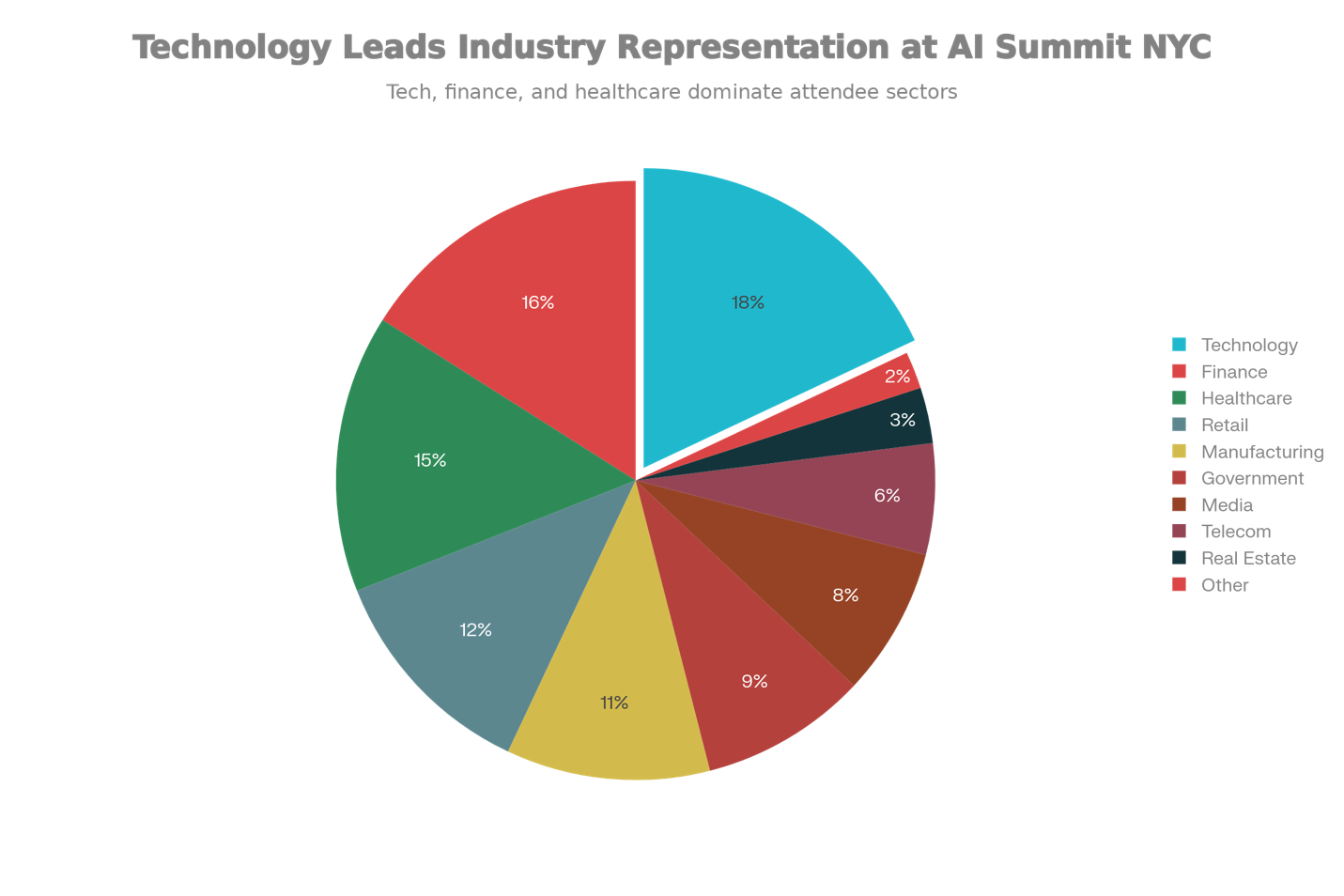
Technology led with 18% of attendees, followed by Finance (16%) and Healthcare (15%). These three sectors alone = 49% of the summit. But here’s what jumped out at me: Real Estate & Construction was only 3% of attendees. In other words, while nearly half the summit was Tech/Finance/Health, the AEC industry’s representation was almost an afterthought that is highlighting a huge gap and opportunity for AI in that field.
That’s either a massive oversight by builders and architects, or it’s massive whitespace. We’re betting on the latter. Talking to architects and construction firms at the summit confirmed why, design coordination, code compliance, and cost estimation are still manual, still slow, still error-prone. A $65B annual waste problem waiting to be solved.
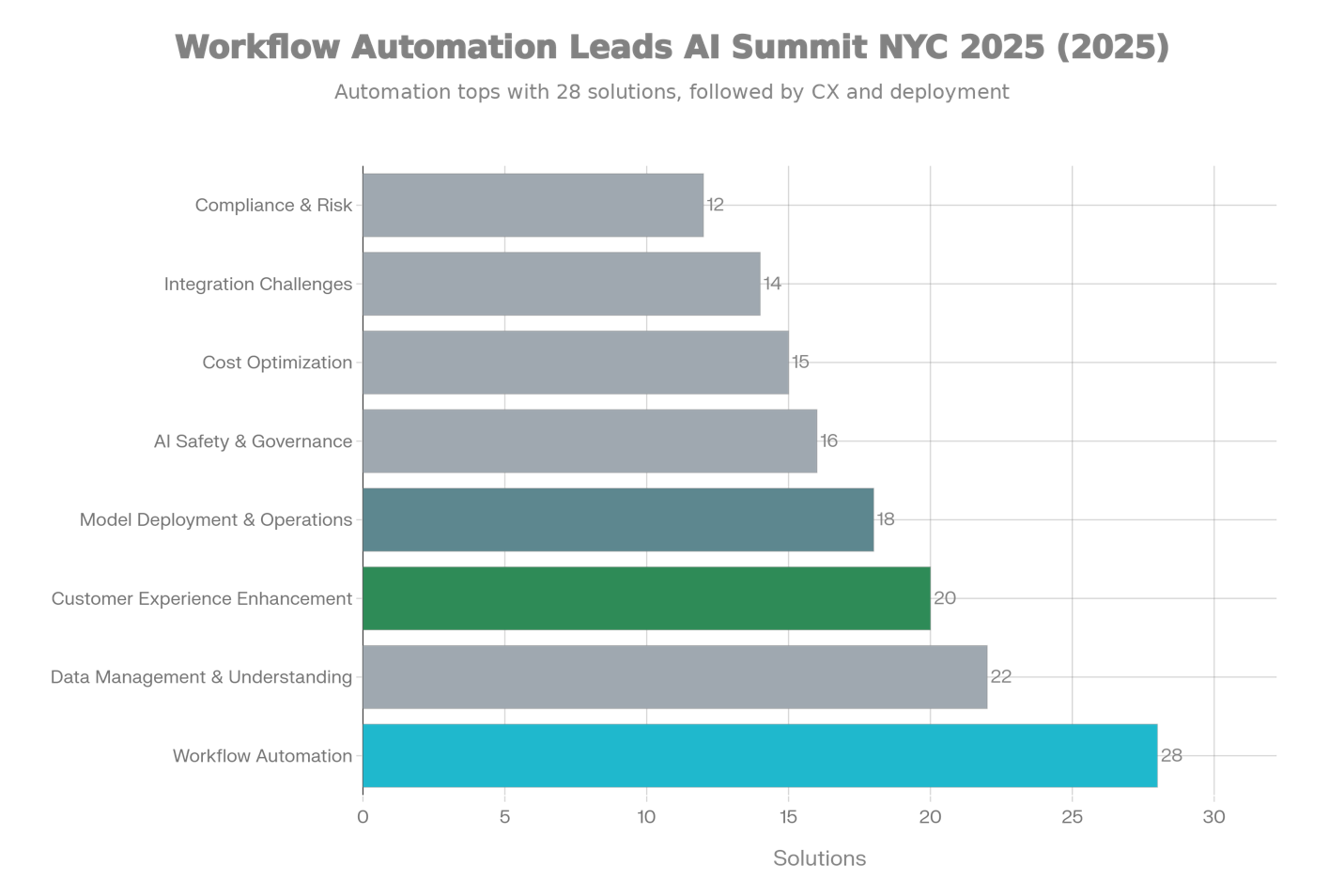
Workflow Automation is the clear winner: 28 solutions addressing this problem. Followed by Customer Experience (20) and Data Management (22).
This is important because it reveals enterprise priorities: they’re not buying AI for innovation. They’re buying it to eliminate tedious manual work and automate existing processes. That’s where near-term ROI lives.
For architectural design: workflow automation means agents that coordinate design teams, handle code compliance checks, and generate cost estimates, exactly what we at Dwellci AI, are building.
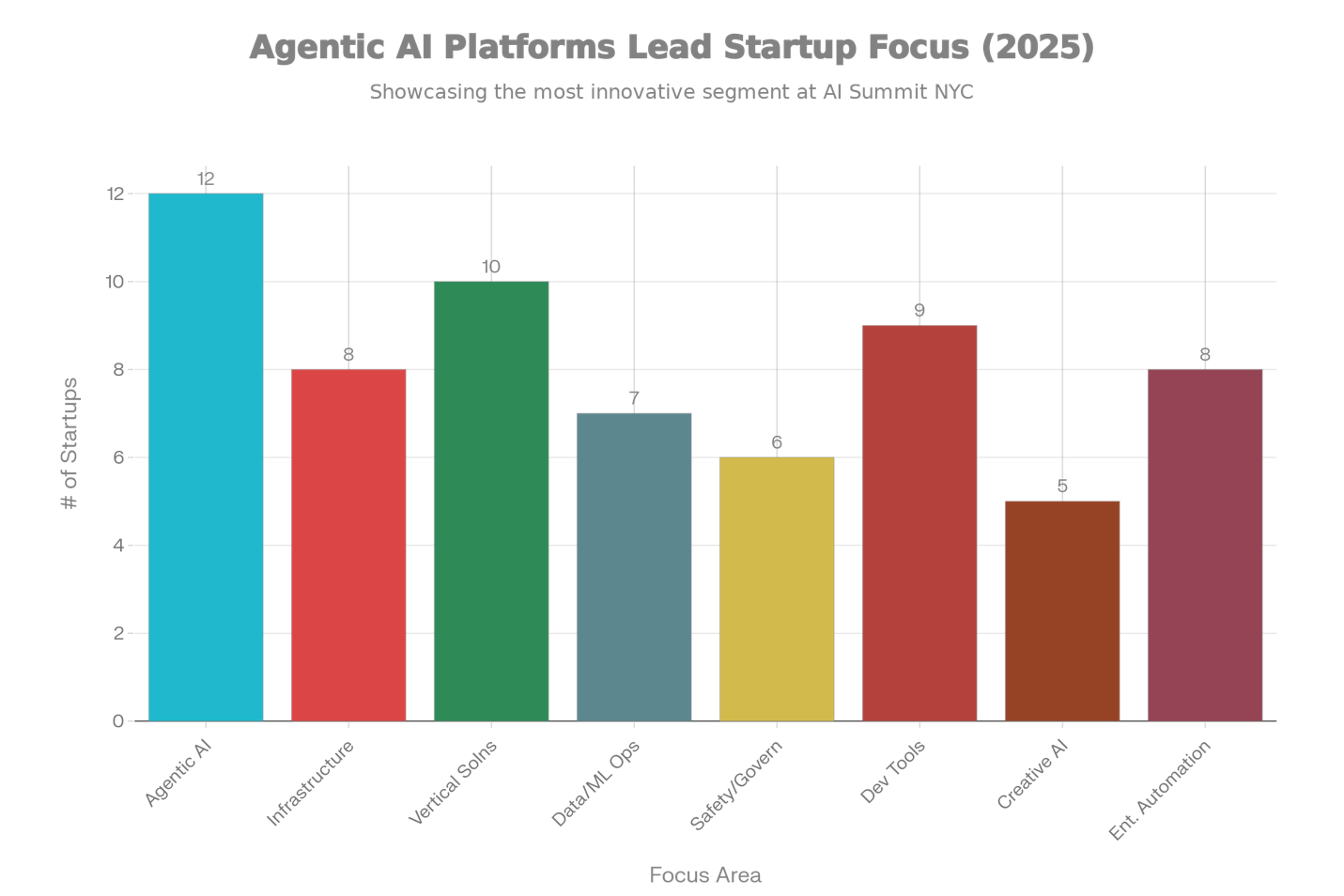
In the startup village, Agentic AI Platforms dominated with 12 startups (18% of participants). This is venture capital’s bet: the next wave of billion-dollar companies will be built on agentic architectures.
Vertical-specific solutions came second (10 startups). This is key. After years of horizontal AI platforms, the market is recognizing that domain expertise matters. An agent for real estate design is fundamentally different from an agent for drug discovery, and specialized founders will win.
All these numbers point to one conclusion: the industry is at an inflection point. Let’s talk about what that means for 2026.
Here’s what I’m confident will happen in 2026:
Gartner: 40% of enterprise applications will feature task-specific AI agents by 2026 (up from <5% today). That’s not gradual adoption, that’s a true inflection point in one year.
Single-agent chatbots will look old-fashioned by 2026. The companies winning will deploy multiple specialized agents collaborating toward shared objectives. One agent for design, another for compliance, another for cost optimization, all working together in a unified system. Even Gartner’s analysts highlighted multi-agent systems as a top trend for 2026, because specialized agents collaborating can handle complex workflows more efficiently.
This is exactly what we’re building at Dwellci AI. Multi-Agent Architectural Design System isn’t one agent. It’s a multi-specialized agents coordinating architectural design with real constraints built in.
Right now, enterprises are nervous about autonomous agents making decisions without oversight. By 2026, AI Security & Governance becomes a required layer, not optional. Companies that build governance into the architecture from day one will win. Companies bolting it on later will lose.
At Dwellci AI, compliance isn’t an afterthought. It’s baked into the agent logic. Building code requirements are hard constraints. Cost overruns trigger alerts. Design feasibility is checked automatically. This positions us advantageously as enterprises demand governance.
The summit confirmed what we’ve believed: horizontal platforms don’t cut it. To build an agent that understands architectural constraints, building codes, structural integrity, constructability, and cost estimation at a level that architects trust, you need deep domain expertise. A generic AI assistant might be able to chat about floor plans, but it won’t know the 2018 International Building Code by heart. An architecture-trained agent will and that’s why architects will trust it.
That’s barrier to entry. That’s defensibility. That’s why we’re betting on vertical depth over horizontal breadth.
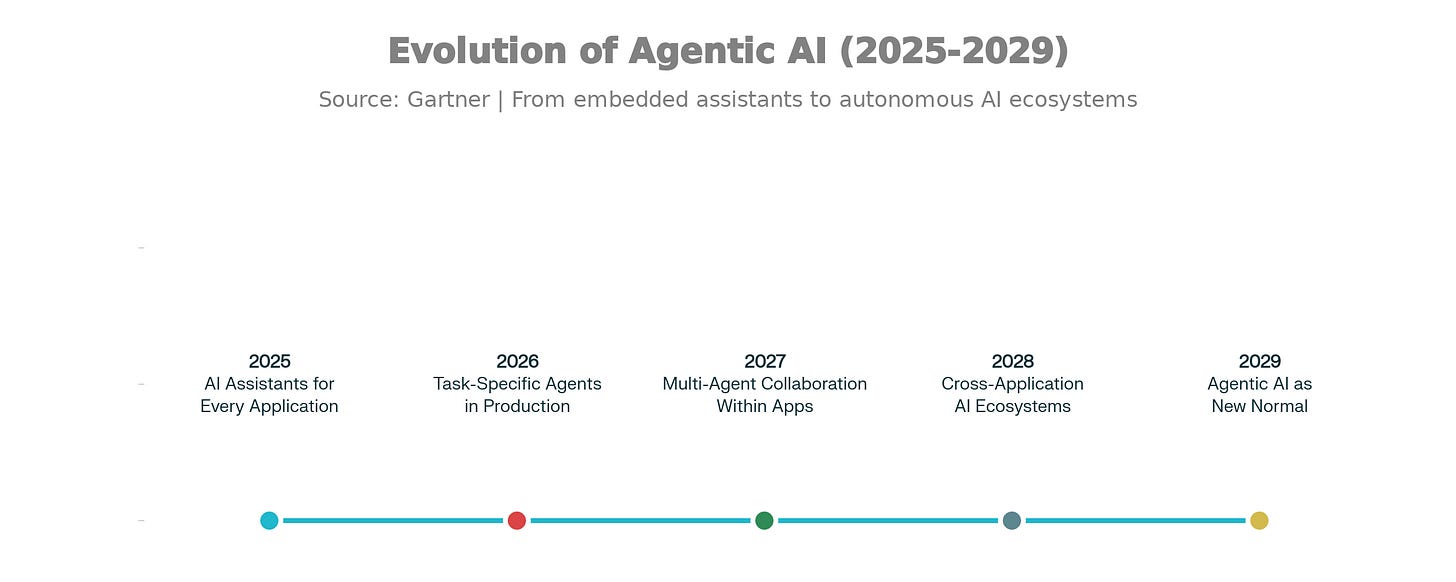
2025: AI assistants everywhere, but they still need humans to tell them what to do (5% of enterprise apps have true agents).
2026: Task-specific agents in production. Agents execute independently. 40% of enterprise applications feature agents. Agent governance frameworks emerge.
2027: Multi-agent collaboration. Agents coordinate across workflows. 1/3 of implementations involve multiple agents.
2028-2029: Agentic AI as new normal. 50%+ of knowledge workers interact with agents daily. Cross-application ecosystems replace siloed applications.
Dwellci AI is entering 2026 with a multi-agent platform built for the 2027-2029 market. Early timing, but the summit proved that early movers in agent infrastructure will define the decade.
Rather than being one of a hundred booths struggling for attention, we chose to walk the floor, listen, and learn. This gave us unfiltered insight into where the market is headed, without the distraction of pitching. The summit was invaluable for understanding where the market is headed. The exhibitor hall tends to commoditize everything and everyone is pitching ‘yet another AI solution’ and competing on novelty.
What we’re building isn’t novel. It’s necessary. Architectural design needs intelligent agents, the market is finally ready for them. We no longer have to prove that agents work, that debate is over. Now, our job is to execute and to capture the vertical market where our domain expertise is our moat. In other words, the summit validated our approach. We’re on the right track, and now it’s about speed and focus.
The AI Summit NYC 2025 confirmed what founders like us suspected: 2026 is the inflection year for agentic AI. Market demand is real (not speculative). Capital is flowing (not hypothetical). Enterprises are deploying (not piloting).
The winners will be:
Dwellci AI checks all four boxes. The market is finally ready for what we’re building.
The next 12 months will prove whether we’re right and we’re ready to make it happen.
If you’re an architect or builder who’s ready to bring AI agents into your workflow, let’s talk. Sign up at dwellci.com.